CASE STUDY · FMCG MANUFACTURING / DISTRIBUTION
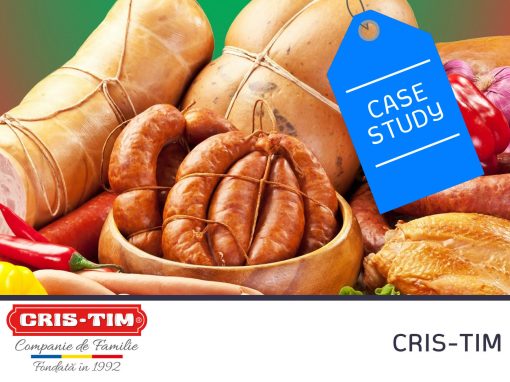
Cris-Tim Case Study: Integrated Logistics Control with Crosspoint WMS
The Cris-Tim case study shows how Crosspoint WMS was implemented to unify and optimize complex FMCG logistics operations involving high volumes, variable-weight products and multiple distribution channels.
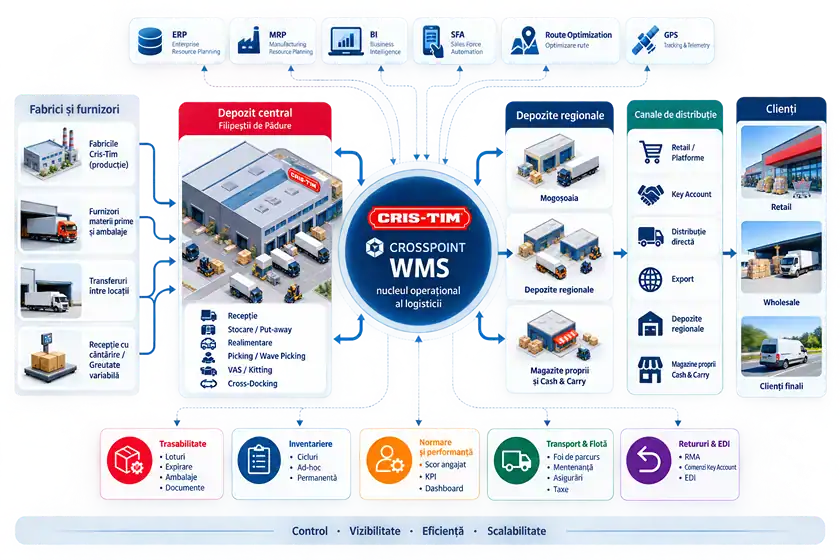
The solution connects warehouse processes with ERP, MRP, BI, SFA, route-optimization and GPS systems, providing integrated control and traceability across the entire logistics flow.
99.95%
inventory accuracy
99.83%
delivery accuracy
≈40
active interfaces
12 months
investment payback
Cris-Tim Case Study: The Logistics Challenge
Cris-Tim’s operation combined growing volumes with a wide variety of products and logistics requirements. Variable-weight items, different product categories — from processed meats and dairy to ready meals — and the specific requirements of each sales channel required different receiving, storage, picking and delivery rules.
At the same time, the logistics structure was undergoing transformation, including relocation of the logistics center, warehouse-layout changes and operational expansion. The WMS had to be implemented in an intensive 24/6 operating environment, with no possibility of stopping operations to initialize the new system.
Products & Variable Weights
Multiple Distribution Channels
Transformation Without Downtime
The Crosspoint WMS Solution for Cris-Tim
The Crosspoint implementation began with Cris-Tim’s need to unify and optimize logistics processes in a system capable of handling both operational complexity and the network’s continuous expansion.
In this context, Crosspoint operates as a WMS for Manufacturing, connecting factory handover, storage, distribution and replenishment of the regional network.
The project began in 2014 with the implementation of Crosspoint WMS in the central warehouse in Filipeștii de Pădure. The solution was later extended to the six regional warehouses and the Mogoșoaia logistics center, enabling workflows to be standardized and coordinated across the organization.
As the project evolved, logistics-related processes were also integrated into the Crosspoint ecosystem — supply and planning, transport and fleet, operational monitoring and performance analysis.
Unified Logistics Flows
Extensive Integration
Complete Inventory Control
Monitoring & Optimization
Cris-Tim WMS Results
Inventory Accuracy
Continuous control of goods movements, lot-level traceability and WMS integration reduced discrepancies between physical inventory and system records.
99.95%
inventory accuracy

Delivery Accuracy
Order and pallet verification, loading control and traceability through dispatch improved delivery-process accuracy.
99.83%
delivery accuracy

Full Traceability
Tracking lots, expiration dates, orders, documents and packaging provides visibility over the goods flow through to the end customer.
100%
traceability

Return on Investment
Higher productivity, reduced losses and better control of logistics processes enabled a rapid return on the investment in Crosspoint.
12 months
investment payback
Operational Impact
Crosspoint transformed Cris-Tim’s logistics control from disparate processes and systems into an integrated platform capable of tracking inventory, orders and resources across the entire flow.
Approximately 40 active interfaces connect the WMS with ERP, MRP, BI, SFA, route-optimization and GPS systems, reducing manual intervention and keeping information synchronized.
In practice, this architecture enables:
- very high inventory and delivery accuracy;
- full traceability of goods and packaging;
- control over variable-weight items;
- monitoring and comparison of operational performance;
- process expansion without losing logistics control.
The result is a WMS infrastructure capable of simultaneously supporting high volumes, different requirements from one operational flow to another and integration with a complex IT ecosystem. Crosspoint becomes the operational core linking logistics processes, data and systems into a unified, controllable flow.
Crosspoint WMS Architecture at Cris-Tim
Taken together, the results in this Cris-Tim case study show how Crosspoint WMS supports complex, high-volume FMCG operations while maintaining control, traceability and process consistency.
The results achieved at Cris-Tim clearly demonstrate the key Crosspoint WMS benefits in complex logistics operations.
Features Implemented in the Initial Phase
The initial configuration included an extensive set of Crosspoint WMS features, adapted to Cris-Tim’s manufacturing, distribution and delivery flows.
Full Traceability
Receiving & Weighing
Storage & Replenishment
Catch Weight Management
Optimized Picking
VAS & Kitting
HUB & Cross-Docking
Delivery & Transport
Features Implemented Later
Deliveries, Returns & EDI
Supply & Planning
Performance & Monitoring
Fleet & Packaging
Cris-Tim on the Crosspoint WMS Implementation
Discover the Cris-Tim team’s perspective on the Crosspoint WMS implementation. Four testimonials on logistics digitalization, process optimization and the results achieved in day-to-day use of the solution.

WMS Implementation
Radu TIMIȘ
See how Crosspoint WMS supported the digitalization and automation of large-scale logistics operations.
✓ post-implementation results
✓ direct and indirect benefits
✓ return on investment
✓ relationship with the implementation team
✓ feedback on using Crosspoint

WMS Implementation & Logistics Transformation
Anișoara Cioroba
Logistics Manager
Cris-Tim Group

Crosspoint WMS Administration & Use
Laurentiu Bisceanu
Administrator WMS
Cris-Tim Group

WMS Impact on Warehouse Operations
Alexandru Tica
Filipești Warehouse Manager
Cris-Tim Group
…If anyone wants to see this system, I invite them here. We will open the doors and show that exactly what I am describing is happening in practice.
We look forward to welcoming you at Cris-Tim.
Radu Timiș
President, Cris-Tim Group
See the Real Impact of Crosspoint WMS at Cris-Tim
About Cris-Tim
Cris-Tim is one of the best-known companies in Romania’s processed-meat market, built around several core values: care for people, responsibility, innovation, tradition and quality. The company offers a diverse range of safe, fresh food products. Across Cris-Tim operations, the primary objectives are quality, product safety and environmental protection. Its quality certifications confirm compliance with the highest standards.
Cris-Tim

Need a WMS for Complex, High-Volume Logistics Operations?
Crosspoint WMS integrates warehouses, inventory, deliveries and existing systems into a unified flow with full traceability and real-time control.
Why Crosspoint for Complex Logistics Operations?
✓ scalability for growing volumes;
✓ integration with ERP, MRP, BI, SFA and other systems;
✓ traceability by lot and expiration date;
✓ configuration for workflows and products with different requirements;
✓ KPI-based monitoring and optimization;
✓ local support and gradual solution expansion.